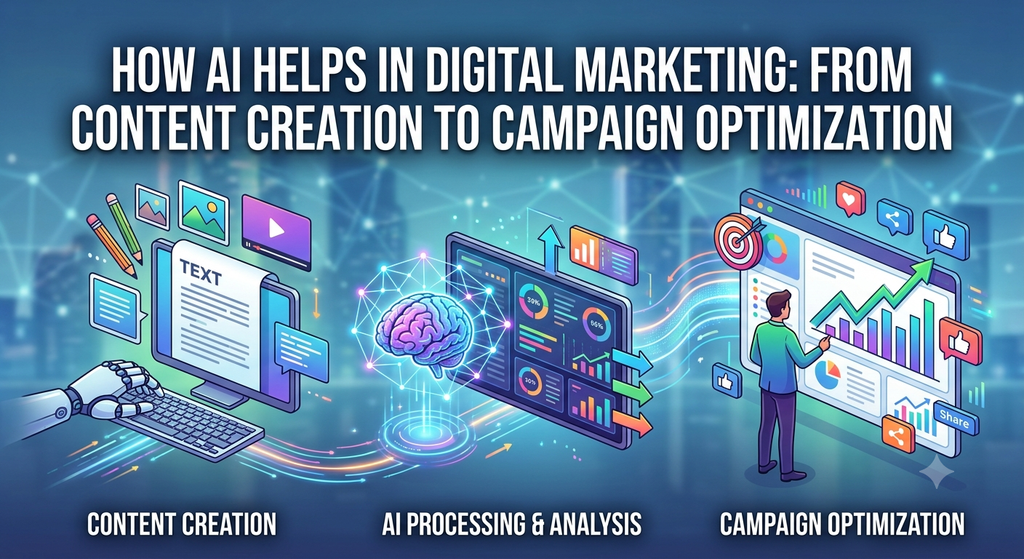
How AI Helps in Digital Marketing: From Content Creation to Campaign Optimization

How AI Helps in Digital Marketing

What is AI in Digital Marketing?

AI in digital marketing means using artificial intelligence to help businesses understand customers, automate marketing tasks, create content and suggestions, and improve advertising results.

For example, AI can analyze customer behavior and help marketers decide what content to show, who to target, and when to reach them for any website or APP.

Common uses of AI include:

  • Content creation: Writing social media posts, emails, blog posts, and ad copy.
  • Chatbots: Answering customer questions automatically.
  • Personalization: Recommending products or content based on a customer’s interests.
  • Advertising: Helping optimize audiences, budgets, and ad campaigns.
  • Data analysis: Finding patterns in website traffic, sales, and customer behavior.
  • SEO: Supporting keyword research, content optimization, and search-intent analysis.
  • Email marketing: Personalizing messages and helping determine effective timing and content.1

Example: An online clothing store can use AI to analyze what a customer has viewed or purchased and recommend products they may be interested in.

In short, AI in digital marketing = using intelligent software to make marketing more automated, personalized, and data-driven.

How AI will help in SEO

AI can help SEO by automating repetitive work, analyzing large amounts of data, identifying opportunities faster, and improving content quality. It doesn’t replace SEO strategy; it makes the SEO workflow more efficient.

AI could be helpful in the SEO work activities.

  • Keyword research and finding related keywords, entities, topics, and search intent
  • Search intent either queries by informational, commercial, navigational, etc
  • Content creation for creating briefs, outlines, drafts, and content variations
  • Content Optimization for identifying missing topics, entities, and semantic relationships
  • Title & Meta for generating and testing SEO title/description variations
  • Internal linking: implement and find relevant pages to link together
  • Technical SEO: finds and helps analyze large URL inventories and technical issues
  • For implementing programmatic SEO and helping generate structured metadata
  • Competitor Analysis: Analyzes competitors’ content and keyword coverage
  • GSC Analysis and finds patterns in clicks, impressions, CTR, and rankings
  • Content Refresh to identify outdated or declining content
  • SEO Reporting: Converts large datasets into actionable insights
  • Use of automation to connect SEO data with workflows

How AI Will Help in Content Creation Strategies

  • Find related search topics
  • Identify common questions users can ask
  • Group topics into a content cluster
  • Generate a content calendar
  • Create briefs for each article
  • Produce a first draft
  • Content headline suggestion based on SEO
  • Suggest SEO titles and meta descriptions.
  • Convert the article into social posts and an email

How AI Will Help in Social Media

AI is transforming social media marketing by helping brands create content faster, understand their audience, automate engagement, and optimize campaigns using data.

  • For content ideas to generate ideas based on trends, audience interests and past performance example: Suggests 20 Instagram/Reels topics
  • Caption Creation: Creates platform-specific captions
  • Content creation helps create images, videos, scripts, and creatives
  • Social Media Calendar builds content calendars based on campaigns and objectives; for example: Creates a 30-day posting plan
  • Audience analysis to identify audience interests, behavior, and engagement patterns
  • Implement personalization to create content for different audience segments
  • Scheduling helps determine suitable posting times; for example, it suggests publishing windows based on historical engagement
  • Ad Optimization Helps analyze audiences, creatives, and campaign performance
  • AI can help turn that single piece of content into an Instagram carousel, a 30-second Reel script, an X post/thread, or a YouTube Shorts script

How AI Will Help for Campaign Optimization

  • Audience targeting identifies audience segments based on behavior and interests
  • Audience segmentation identifies for groups users according to their characteristics and actions
  • Ad Creative Optimization analyzes different creatives and messaging Example: Identifies which headline/image combination performs better
  • Budget allocation helps identify where the campaign budget is producing better results
  • Bid optimization uses performance signals to adjust bids
  • A/B testing to generate and compare multiple campaign variations
  • Real-time monitoring detects changes in campaign performance
  • Conversion prediction uses historical signals to estimate conversion likelihood
  • Personalization matches messages to audience behavior
  • Cross-channel optimization compares performance across channels
  • Customer journey analysis finds where users drop off
  • Performance reporting turns campaign data into actionable insights

AI analyzes the campaign and finds that:

  • Creative A gets the highest CTR
  • Audience B generates more qualified leads
  • Campaign C has a lower cost per lead
  • Mobile users convert more frequently
  • Users who watch 50%+ of a video are more likely to submit a form

Looking for help on how to use AI in your digital marketing activities? Connect with our team at TrueSEOHelp

10 Reasons You Need a Digital Marketing Strategy in 2024 For Business Success

Digital marketing strategies are continually evolving, and what’s effective in 2024 may differ from previous years. However, here are the top 10 digital marketing strategies that are likely to be important in 2024:

  • Content Marketing: High-quality, relevant content remains the cornerstone of digital marketing. Creating valuable blog posts, videos, infographics, and other content will continue to attract and engage audiences.
  • Video Marketing: Video content will be even more crucial. Platforms like YouTube, TikTok, and Instagram Reels offer excellent opportunities to connect with your audience.
  • SEO (Search Engine Optimization): Optimizing your website and content for search engines is a fundamental strategy that will never go out of style. Focus on voice search and featured snippets for better visibility.
  • AI and Automation: Leveraging artificial intelligence and automation tools for personalized marketing, chatbots, and data analysis can streamline your efforts and improve customer experiences.
  • Social Media Marketing: Social media platforms will remain key for building brand awareness and engaging with your audience. Focus on the platforms that align with your target demographic.
  • Influencer Marketing: Collaborating with influencers in your niche can help you reach a wider audience and build trust with consumers.
  • Chatbots and Messaging Apps: Using chatbots and messaging apps for customer support and engagement is becoming increasingly important. They provide instant communication and can improve the customer experience.
  • Email Marketing: Email marketing continues to be a cost-effective way to nurture leads and maintain customer relationships. Personalization and segmentation will be key.
  • Augmented Reality (AR) and Virtual Reality (VR): These technologies are becoming more accessible and can be used for immersive product experiences and interactive marketing campaigns.
  • Data Privacy and Compliance: As privacy regulations become more stringent, ensuring data privacy and compliance with laws like GDPR and CCPA will be essential. Building trust with customers by protecting their data is crucial.

Remember that the specific strategies you choose should align with your target audience, industry, and business goals. It’s also important to stay updated with the latest digital marketing trends and adapt your strategies accordingly.

Digital Marketing Carrier Growth in India 2023

As of my last knowledge update in September 2021, digital marketing was a rapidly growing field in India, and it’s likely to continue its growth in 2023. The digital marketing industry in India has been evolving due to increased internet penetration, smartphone usage, and the government’s Digital India initiatives. Here are some factors contributing to the growth of digital marketing careers in India in 2023:

  • Rising Internet Penetration: India has seen significant growth in internet users, especially in rural areas. This has created a vast online audience, making digital marketing an essential tool for reaching potential customers.
  • E-commerce Boom: The growth of e-commerce platforms in India has led to increased demand for digital marketing professionals. Online businesses rely on digital marketing to attract customers and increase sales.
  • Mobile Marketing: With the increasing use of smartphones, mobile marketing has become a focal point for businesses. Professionals specializing in mobile marketing, app marketing, and responsive design are in demand.
  • Social Media Dominance: Social media platforms are widely used in India. Companies are leveraging platforms like Facebook, Instagram, Twitter, and LinkedIn for brand promotion and customer engagement. Social media marketing experts are sought after.
  • Content Marketing: Content marketing is a significant component of digital marketing. Companies need skilled content creators, including writers, video producers, and graphic designers, to develop engaging content.
  • SEO and SEM: Search Engine Optimization (SEO) and Search Engine Marketing (SEM) continue to be vital for online visibility. Professionals with expertise in these areas are in demand to help companies rank well on search engines.
  • Data Analytics: Data-driven decision-making is crucial in digital marketing. Professionals who can analyze data, make insights, and optimize marketing campaigns are highly valued.
  • Freelancing and Remote Work: Many digital marketing roles can be done remotely or as freelancers. This flexibility in work arrangements has expanded opportunities for professionals across India.
  • Startup Ecosystem: India has a vibrant startup ecosystem, and many startups are focusing on digital marketing to reach their target audience. This provides additional job opportunities in the field.
  • Training and Education: Recognizing the demand for digital marketing skills, various institutes, and online platforms offer courses and certifications. This facilitates the growth of skilled professionals in the industry.

    To have a successful career in digital marketing in India in 2023, consider the following:
    • Continuous Learning: Stay updated with the latest trends, tools, and techniques in digital marketing through courses, webinars, and industry publications.
    • Certifications: Earning certifications in areas like Google Ads, Google Analytics, Facebook Blueprint, and others can enhance your credibility.
    • Networking: Build a professional network by attending industry events and joining relevant online communities.
    • Specialization: Consider specializing in a specific area of digital marketing, such as social media marketing, SEO, content marketing, or data analytics.
    • Experience: Gain practical experience through internships or freelance work to build your portfolio.
    • Adaptability: Be adaptable as the digital marketing landscape continues to evolve.

      Digital marketing offers numerous career opportunities in India, and its growth is likely to continue in 2023 and beyond as businesses increasingly rely on online channels to connect with their target audiences.

    What are the 8 Types of Digital Marketing?

    There are several types of digital marketing strategies that businesses commonly use to promote their products or services online. Here are eight key types of digital marketing:

    • Search Engine Optimization (SEO): SEO involves optimizing a website to improve its visibility and ranking on search engine results pages organically. This includes keyword research, on-page optimization, link building, and other techniques to increase organic search traffic.
    • Pay-Per-Click Advertising (PPC): PPC advertising involves placing paid ads on search engines or other platforms, and advertisers pay a fee each time their ad is clicked. Examples include Google Ads, Bing Ads, and social media advertising platforms.
    • Social Media Marketing: This involves promoting products or services through social media platforms like Facebook, Twitter, Instagram, LinkedIn, and others. Businesses can create organic posts, engage with users, run paid ad campaigns, and leverage influencers to reach their target audience.
    • Content Marketing: Content marketing focuses on creating and distributing valuable, relevant, and consistent content to attract and engage a specific audience. This includes blog posts, articles, videos, infographics, ebooks, and more.
    • Email Marketing: Email marketing involves sending targeted messages to a group of people who have willingly subscribed to receive updates from a business. It is used for various purposes, such as delivering personalized content, promoting products, and nurturing customer relationships.
    • Influencer Marketing: Influencer marketing involves collaborating with influential individuals in a specific industry or niche to promote products or services. Influencers have a dedicated following, and their recommendations can significantly impact consumer behavior.
    • Affiliate Marketing: In affiliate marketing, businesses reward affiliates for each customer or visitor brought through their own marketing efforts. Affiliates typically earn a commission based on the sales or leads they generate.
    • Online PR and Reputation Management: This involves managing a brand’s online reputation and handling public relations activities through various digital channels. It includes monitoring online mentions, addressing customer feedback, and maintaining a positive brand image.

    These are just a few examples of the many types of digital marketing strategies available. Businesses often use a combination of these methods to reach their target audience and achieve their marketing goals.

    How to Write Heading of the Article

    Here are some tips on how to write a good heading for an article:

    • Make it clear and concise. The heading should give the reader a good idea of what the article is about. It should be short and to the point, and it should avoid jargon or technical terms that the reader may not understand.
    • Use keywords. The heading should include keywords that are relevant to the article’s topic. This will help people find the article when they are searching for information on that topic.
    • Be creative. A creative heading can help to grab the reader’s attention and make them want to read more. However, it’s important to make sure that the heading is still relevant to the article’s content.
    • Use a strong verb. A strong verb can help to make the heading more interesting and engaging. For example, instead of saying “How to Write a Heading,” you could say “Write a Heading That Will Get Noticed.”
    • Use active voice. Active voice is more engaging than passive voice. For example, instead of saying “The heading should be clear and concise,” you could say “Make the heading clear and concise.”
    • Avoid exclamation points. Exclamation points can make the heading seem too informal or even unprofessional.
    • Proofread carefully. Make sure that the heading is free of errors in grammar and spelling.

    Here are some examples of good headings:

    • How to Write a Heading That Will Get Noticed
    • The Secret to Writing Effective Headings
    • 5 Tips for Writing Headings That Grab Attention
    • How to Write Headings That Will Make Your Readers Click
    • The Ultimate Guide to Writing Headings

    By following these tips, you can write headings that are clear, concise, and engaging. This will help to ensure that your articles are seen and read by as many people as possible. Connect TrueSEOHelp for more information and Optimization for any verticle website.

    How ChatGPT can help with local SEO

    As an AI language model, ChatGPT can provide helpful information and tips to improve your local SEO efforts. Here are some ways ChatGPT can assist you:

    • Keyword research: ChatGPT can help you identify the best keywords and phrases to target for your local SEO campaign. You can ask ChatGPT to suggest keywords related to your industry or location, and it can provide you with a list of relevant keywords to use in your content and metadata.
    • Content optimization: ChatGPT can help you optimize your website and other online content to improve your local search rankings. You can ask ChatGPT for tips on how to optimize your content for local SEO, including using location-specific keywords, creating high-quality content that provides value to your audience, and optimizing your meta tags and descriptions.
    • Local listings: ChatGPT can help you identify the best local directories and online listings to use for your business. You can ask ChatGPT to suggest local directories and review sites that are relevant to your industry and location, and it can provide you with tips on how to optimize your listings to improve your local search rankings.
    • Backlinking: ChatGPT can provide you with information on how to build high-quality backlinks to your website, which can help improve your local search rankings. You can ask ChatGPT for tips on how to create high-quality content that other websites will want to link to, and how to reach out to other websites to request backlinks.

    Overall, ChatGPT can be a valuable resource for improving your local SEO efforts. By providing you with helpful tips and information, ChatGPT can help you optimize your online presence to attract more local customers and grow your business.

    How To Optimize Webpage For Yandex Search Engine?

    To optimize a web page for Yandex, the following tips can be followed:

    • Use Relevant Keywords: Research and use relevant keywords in the page title, meta description, headings, and content to increase its relevance to Yandex users.
    • Improve Website Structure: Make sure the website is well-structured with a clear hierarchy and easy-to-follow navigation.
    • Make Sure The Website is Mobile-Friendly: Yandex prioritizes mobile-friendly websites in its search results.
    • Use Schema Markup: Utilize schema markup to provide Yandex with additional information about your content, making it easier for the search engine to understand the content of your website.
    • Get Backlinks from High-Quality Sites: High-quality backlinks from other websites can improve your website’s visibility in Yandex’s search results.
    • Monitor Analytics and User Feedback: Use tools such as Yandex.Metrica to monitor user behavior and feedback, and make adjustments to improve the user experience.
    • Avoid Black Hat SEO Techniques: Yandex has strict guidelines against using unethical SEO techniques, such as keyword stuffing or link buying, to artificially improve your website’s ranking.
    Yandex Search Engine

    By following these optimization tips, you can improve the visibility and relevance of your website in Yandex’s search results. However, it’s important to note that Yandex updates its search algorithm regularly, so it’s important to stay up-to-date with best practices to maintain a strong ranking.

    Why Google is so important for us ?

    Google is important for many reasons, but some of the key reasons include:

    1. Reach: Google is the most widely used search engine in the world, with billions of users accessing it every day. This means that if you want to be found by people who are searching for products or services like yours, it’s essential to have a strong presence on Google.
    2. Relevance: Google’s algorithm is designed to deliver the most relevant results to users based on their search queries. This means that if your website is optimized for search and provides valuable information to users, you are more likely to rank well in Google’s search results.
    3. Trust: Because Google is the most widely used search engine, it’s also one of the most trusted. When people see a website that ranks well in Google’s search results, they tend to trust that the website is credible and reliable.
    4. Businesses and brands: Google is also important for businesses and brands. Having a strong presence on Google can help increase brand awareness and drive more qualified traffic to your website. This can lead to more sales and revenue for your business.
    5. Targeting: Google is also important for targeting specific audiences. With the help of Google Ads, businesses and marketers can target specific demographics, geographic locations, interests, behaviors, and more. This helps to increase the chances of reaching the right audience at the right time.
    6. Data collection: Google also collects a lot of data about users and their behavior online. This data can be used by businesses and marketers to gain insights about their audience and optimize their digital marketing strategies.
    Google Search Engine

    In short, Google is important because it’s the most widely used search engine in the world, it’s trusted by users, it can drive more traffic and revenue to your website, and it can help you target specific audiences.

    How does a Keyword impact Search Engine Optimization?

    Keywords play a crucial role in search engine optimization (SEO) because they help search engines understand the content and context of a webpage. When a search engine crawls a webpage, it looks for keywords that indicate the topic and purpose of the page. These keywords are then used to determine the relevance of the page to a particular search query, and the page is ranked accordingly.

    There are a few key ways that keywords impact SEO:

    Relevance: Keywords help search engines understand the topic of a webpage, which in turn helps them determine whether the page is relevant to a particular search query. Pages that are more relevant to a search query will generally be ranked higher in the search results.

    Content optimization: Keywords can be used to optimize the content of a webpage. By including keywords in the title, headings, and throughout the body of the page, you can help search engines understand the main topics and themes of the page.

    Link building: Keywords can also be used to optimize the anchor text of links pointing to a webpage. Anchor text is the visible, clickable text in a hyperlink. Search engines use anchor text to understand the context of a link and the topic of the linked-to webpage.

    Competition: Choosing the right keywords can also impact the competitiveness of your SEO efforts. If you choose keywords that are too broad, you may have a lot of competition from other websites. On the other hand, if you choose keywords that are too specific, you may not get as much traffic to your site. Finding the right balance of keyword specificity and search volume is important for effective SEO.

    CTR: Keywords also play a role in click-through rate (CTR) which is a significant ranking factor. When a user performs a search query and sees your website as a result, the title and meta description (snippet) will be the first thing they see. If the title and meta description contains the keywords they searched for, they’re more likely to click and visit your website.

    It’s important to note that while keywords are important, they are just one part of a comprehensive SEO strategy. Other important factors include site architecture, link building, and technical SEO.

    What is digital marketing? What strategies have to follow for success?

    Digital marketing is the promotion of products or services using digital channels to reach and engage with customers. These channels include search engines, social media, email, and websites. The goal of digital marketing is to increase visibility, drive website traffic, and ultimately convert visitors into customers.

    There are several strategies that can be used for digital marketing, some include:

    1. Search Engine Optimization (SEO): Optimizing your website and its content to rank higher in search engine results pages (SERPs) for relevant keywords. Know more about SEO
    2. Pay-Per-Click Advertising (PPC): Running ads on search engines or social media platforms and paying a fee each time the ad is clicked. Know more about PPC
    3. Content Marketing: Creating and distributing valuable, relevant, and consistent content to attract and engage a specific target audience.
    4. Social Media Marketing: Promoting your brand, products, or services on social media platforms like Facebook, Instagram, Twitter, and LinkedIn. Know more about Social Marketing
    5. Email Marketing: Sending promotional emails to a list of subscribers who have opted-in to receive them.
    6. Influencer Marketing: Partnering with influencers in your industry to promote your brand, products, or services.
    7. Affiliate Marketing: Partnering with other businesses to promote each other’s products or services.
    8. Video Marketing: Creating and distributing videos to promote your brand, products, or services.
    9. Mobile Marketing: Creating mobile-friendly content and ads to reach customers on their smartphones and tablets.
    10. Remarketing: Showing targeted ads to users who have previously interacted with your website or mobile app.

    These are some examples of digital marketing strategies, many other techniques and platforms can be used as well. It’s important to find the right mix of strategies that work for your business and goals.